Probate Bond Guide
August 24, 2026 · Marc Cormier · Last Updated: August 2026
Can't Qualify for a Maryland Probate Bond? What Happens Next?
This article provides general educational information about Maryland probate and estate real estate. It is not legal advice. Bond and appointment questions involving a specific estate should be discussed with the Register of Wills and a qualified Maryland probate attorney.
You were named executor in the will.
You filed, or are preparing to file, the probate paperwork.
Then you discovered you need a surety bond to serve as personal representative.
There's just one problem:
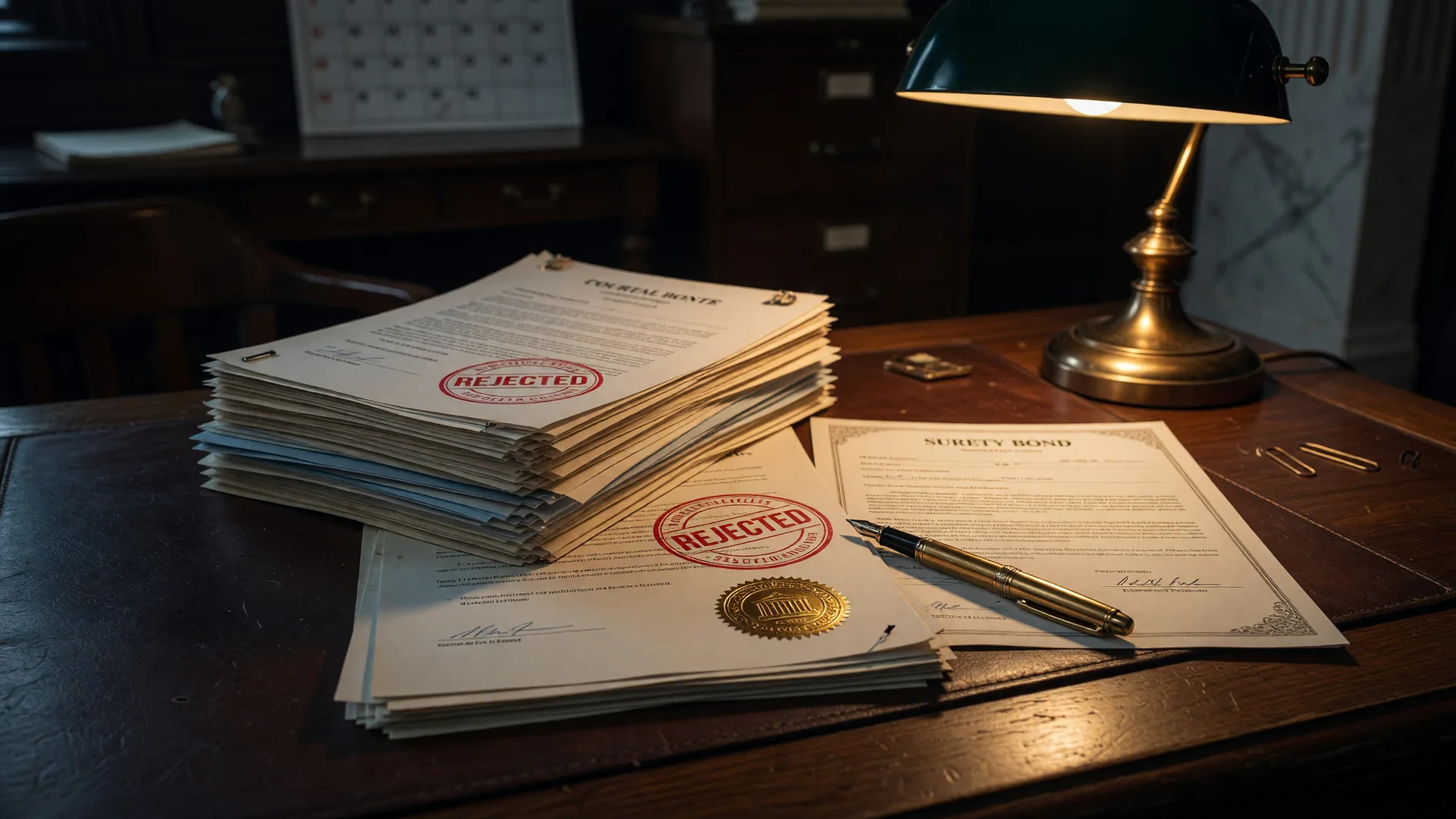
The bonding company will not approve you.
What happens now?
In Maryland, this can be a serious issue because filing any required bond is part of qualifying for appointment as personal representative.
Maryland Courts specifically warns that if someone cannot qualify for the required bond, another person may have to be appointed personal representative.
But a denial from one bonding company does not automatically tell you what the final outcome of the probate case will be.
Here is what you need to know.
Important: This article provides general educational information about Maryland probate and estate real estate. It is not legal advice. Bond and appointment questions involving a specific estate should be discussed with the Register of Wills and a qualified Maryland probate attorney.
Quick Answer: What Happens If I Can't Get a Probate Bond in Maryland?
If a bond is required before you can serve as personal representative and you cannot obtain that bond, you may not be able to qualify for appointment.
Maryland Courts warns that someone else may have to be appointed if the proposed personal representative cannot qualify for the required bond.
Before assuming that is the only solution, determine:
- What type of bond is actually required?
- Does the will expressly excuse the full bond?
- Can all interested persons legally waive the full bond?
- Why did the surety company decline the application?
- Are there other lawful options that should be discussed with the Register of Wills or probate attorney?
Start with the requirement itself.
Why Does Maryland Require a Probate Bond?
A personal representative can control substantial estate assets.
Those assets belong to the estate, not personally to the executor.
A probate bond provides financial protection if the personal representative fails to properly administer estate property.
Depending on the bond involved, the protection can extend to heirs, legatees, creditors, the State of Maryland, and other interested persons.
This is why the bonding company cares about the financial history of the person asking to be bonded.
The surety company is taking a risk.
Why Would a Surety Company Deny an Executor?
There isn't one universal underwriting rule for every surety company.
Maryland Courts does, however, warn applicants that the bonding company may consider information such as credit score, assets, employment history, and information contained in the bond application.
The size of the required bond can also make the underwriting issue more important.
For example, someone who presents an acceptable risk for a relatively small bond may not necessarily qualify under the same terms for a much larger bond.
Individual surety companies establish their own underwriting requirements.
Can Bad Credit Stop Me From Being an Executor in Maryland?
Potentially.
Bad credit does not automatically mean that someone cannot serve as personal representative.
But if a full bond is required and the person cannot obtain it, the inability to satisfy the bond requirement can prevent that person from qualifying for appointment.
The probate court isn't necessarily saying: "Your credit score is too low to be executor."
Instead, the problem may be: "A bond is required, and you have not been able to obtain the required bond."
The practical result can still be serious.
But the Will Names Me as Executor. Doesn't That Control?
Being named in someone's will is important.
But it is not necessarily the final step.
Maryland generally uses the term personal representative for the person legally appointed to administer the estate.
Under Maryland Estates and Trusts § 6-101, qualifying for appointment includes filing:
- acceptance of the duties
- any required bond
- the required consent to personal jurisdiction
So there can be an important difference between being nominated in the will and being legally appointed and qualified to administer the estate.
A will may express the deceased person's choice, but the person still has to satisfy Maryland's legal requirements for appointment.
Step 1: Find Out What Bond You Actually Need
Do not start by assuming you need a large full surety bond.
Maryland has an important distinction between a Bond of Personal Representative and a Nominal Bond of Personal Representative.
The full personal representative bond provides broader financial protection.
The nominal bond is much more limited and generally protects payment of estate debts, Maryland inheritance taxes, court costs and Register of Wills fees.
Which one applies can make a major difference.
Step 2: Read the Will
Look specifically for language addressing bond.
Maryland law allows a will to expressly excuse the broader bond requirement.
If the will contains appropriate bond-waiver language, that may change what is required.
Do not assume. Have the actual will reviewed.
Even when the full bond is excused, a nominal bond may still be required under Maryland law.
Step 3: Determine Whether All Interested Persons Can Waive the Full Bond
Maryland law also allows the broader bond requirement to be waived through the written waiver of all interested persons.
Maryland provides Form RW 1117, Waiver of Bond, for this purpose.
This can be important when a proposed personal representative is having trouble obtaining a full surety bond.
But pay attention to one word: ALL.
If there are four interested persons and only three sign, do not assume the requirement has been waived.
And do not pressure an heir into signing. The bond exists for a reason. Someone may have a legitimate reason for wanting that protection.
If there is disagreement, get legal guidance.
Step 4: Find Out Why the Bond Was Declined
"Denied" doesn't tell you enough. Ask what happened.
Was the issue credit? Insufficient financial strength? The size of the bond? Incomplete information? Something on the application? The particular surety company's underwriting rules?
Knowing the problem is important before deciding what to do next.
A denial by one company should not be treated as legal proof that Maryland has declared you ineligible to serve.
The surety company's underwriting decision and the probate appointment decision are different issues.
Step 5: Ask Whether Another Surety Company Is an Option
Surety companies can have different underwriting standards.
A denial from one company therefore does not necessarily establish that every company will reach the same decision.
That does not mean you should simply submit applications everywhere.
Instead, explain the denial to the probate attorney, Register of Wills, insurance professional or bonding professional assisting with the estate.
Ask whether another approved surety may be appropriate.
Step 6: Ask Whether the Bond Amount Can Be Addressed
Maryland law gives the court authority to determine the amount of the bond and, for good cause, increase or decrease it during administration.
Maryland Estates and Trusts § 6-102 also contains provisions involving qualifying collateral and estate cash placed in certain restricted accounts.
These rules can be technical.
But if the size of the bond is creating the underwriting problem, it is worth asking the estate's attorney whether any statutory options are applicable.
Do not move estate money or pledge assets simply to solve a bond problem without proper legal guidance.
Step 7: Consider Whether Someone Else May Need to Serve
This may be the answer nobody wants to hear.
Maryland Courts specifically states that when a proposed personal representative cannot qualify for the required bond, someone else may have to be appointed personal representative.
That does not mean the person named in the will did something wrong.
It may simply mean the estate needs another qualified person who can satisfy the requirements for appointment.
Who has priority to serve and how a substitute should be appointed are legal questions.
This is where a Maryland probate attorney can become especially important.
Can a Co-Personal Representative Solve the Bond Problem?
Families sometimes ask: "Can we just add someone else who has better credit?"
Do not assume that works.
Maryland law allows multiple personal representatives in some circumstances, but adding another person can affect authority, responsibility, bonding and estate administration.
Whether it helps with a specific surety problem depends on the facts and the applicable probate requirements.
This is a question to take directly to the estate's attorney and Register of Wills.
What If One Heir Refuses to Waive the Bond?
This can become frustrating.
Imagine three children inherit from their mother's estate.
Two trust the proposed personal representative. The third does not.
The first two sign bond waivers. The third refuses.
Because Maryland's statutory waiver provision refers to all interested persons, that refusal can matter.
But remember: the heir is not necessarily being difficult. The bond is designed to provide protection.
Trying to pressure the person into signing may make the probate dispute worse.
This is usually the point to get legal advice.
Does the Value of the Estate's House Make It Harder to Get Bonded?
This deserves special attention.
Suppose Mom dies owning:
House: $800,000
Checking account: $15,000
Furniture and belongings: $10,000
The family sees an estate worth approximately $825,000 and assumes the personal representative automatically needs an $825,000 bond.
That is not necessarily how Maryland's regular-estate bond calculation works.
Maryland Estates and Trusts § 6-102 generally focuses the maximum bond penalty on the probable maximum value of the estate's personal property during administration, subject to statutory adjustments.
A house is real property. That distinction can matter significantly.
But What Happens When the Estate Sells the House?
Now the issue gets more interesting.
An estate house may start as real property.
Once it is sold, the estate can receive hundreds of thousands of dollars in cash proceeds.
That can change the assets under the personal representative's control.
Maryland law allows the court to increase or decrease the bond during estate administration for good cause.
If the estate plans to sell valuable real estate, the personal representative should discuss the bond implications with the estate's attorney and Register of Wills rather than assuming the original bond amount will remain unchanged.
Example: A $600,000 Maryland Probate House
Assume an estate contains:
House: $600,000
Estate bank account: $20,000
Personal property: $10,000
The personal representative obtains the bond required when the estate opens.
Several months later, the house sells.
After mortgages, closing expenses and other permitted charges, assume substantial cash proceeds are paid to the estate.
The financial makeup of the estate has changed dramatically. The estate went from holding a large piece of real property to potentially holding a large amount of cash.
That is exactly why bond questions should not be treated as a one-time box that gets checked when probate opens.
Can I Sell the House Before I Get the Bond?
Be very careful here.
Being named executor in a will does not necessarily mean you have already been legally appointed and qualified as personal representative.
Maryland law makes filing any required bond part of qualifying for appointment.
Before signing a listing agreement, sales contract or other documents involving estate real estate, verify that you have the legal authority required to act for the estate.
Who Pays for the Probate Bond?
Maryland law provides that the bond premium is chargeable against the estate's property.
So the cost of the required bond is generally an estate administration expense.
The amount charged by the surety company can depend on the amount of the bond and its underwriting.
Don't Confuse a Probate Bond With Homeowners Insurance
They solve very different problems.
A probate bond deals with the personal representative's proper administration of the estate. Property insurance deals with risks involving the house itself.
An estate containing a vacant house may need special attention because a normal homeowner's insurance policy may not provide the coverage the family assumes after the owner dies or the property becomes vacant.
A Bond Problem Can Become a Real Estate Problem
The estate may have a house that needs to be secured, insured, cleaned out, maintained, repaired, listed, or sold.
Meanwhile, expenses continue: mortgage payments, property taxes, utilities, insurance, HOA fees, landscaping, repairs, clean-out expenses.
If the person expected to handle the estate cannot qualify for appointment because of a bond problem, decisions involving the property can stall.
That is why identifying a potential bond issue early matters.
A Practical Checklist If You Were Denied a Maryland Probate Bond
- Don't panic and don't hide the denial.
- Get a copy of the will.
- Determine whether the will expressly excuses the full bond.
- Identify all interested persons.
- Determine whether a lawful written waiver is possible.
- Confirm exactly what bond the Register of Wills requires.
- Ask the surety or bond professional why the application was declined.
- Discuss whether another surety company may be appropriate.
- Ask the probate attorney whether the amount or form of security can legally be addressed.
- Do not move estate assets around simply to qualify for a bond.
- Do not assume you can act as personal representative merely because the will names you.
- If necessary, discuss whether another qualified person should seek appointment.
- If the estate owns real estate, protect the property while the appointment issue is being resolved.
The goal is not simply to "get around the bond." The goal is to properly open and administer the estate while protecting its assets.
Frequently Asked Questions
Can I be executor in Maryland with bad credit?
Possibly. Maryland law does not simply establish a minimum consumer credit score for every personal representative. But if a surety bond is required and you cannot obtain the required bond, that can prevent you from qualifying for appointment.
What credit score do I need for a Maryland probate bond?
There is not one Maryland statutory credit-score number that guarantees approval. Surety companies use their own underwriting standards.
Can I get a probate bond with poor credit?
Possibly, depending on the surety company, bond amount and circumstances. A probate attorney or bond professional can help determine the appropriate next step.
What happens if no bonding company will approve me?
If the required bond cannot be obtained, Maryland Courts warns that someone else may have to be appointed personal representative.
Can my brothers and sisters waive the bond?
Potentially, but Maryland's general waiver provision requires written waiver by all interested persons. Confirm who legally qualifies as an interested person before relying on waivers.
What if one heir refuses to sign the waiver?
A refusal can prevent reliance on the all-interested-persons waiver provision. Get legal advice rather than assuming the heir can be ignored.
Can the will waive my bond?
Yes. Maryland law recognizes a will that expressly excuses the broader bond requirement, although a nominal bond may still be required.
Can I use a different bonding company after being denied?
Surety companies can have different underwriting requirements. Discuss the denial and whether another surety is appropriate with the professionals handling the estate.
Does the estate pay for the bond?
Maryland law provides that the bond premium is chargeable against estate property.
Can the probate bond change after the house is sold?
Potentially. Maryland law permits the court to adjust bond requirements during administration for good cause. Selling real estate can significantly change the assets controlled by the personal representative, so ask the attorney or Register about the effect on the particular estate.
The Bottom Line
If you cannot qualify for a Maryland probate bond, do not ignore the problem.
The bond may be a condition of your appointment.
But a denial is also a signal to find out exactly what the estate requires.
Start with four questions:
What bond is required?
Can the full bond legally be excused or waived?
Why did the surety decline me?
If I still cannot obtain the required bond, who can legally serve instead?
Solve those questions early.
Waiting can allow taxes, insurance, mortgage payments, utilities and other property expenses to continue eating away at the estate.
Does the Estate Own a House?
If a Maryland estate owns real estate, the bond issue may be only one piece of the puzzle.
Before spending thousands cleaning out or repairing the property, or accepting a quick investor offer, find out what the house is worth and what selling strategy makes the most sense for the estate.
Some estate properties should be sold as-is. Others can produce significantly more for the estate with the right preparation, repairs, staging and marketing.
The goal should be simple: protect the property, understand the options, maximize the estate's net proceeds.
Talk with Marc Cormier about the estate property and your options.
Call Marc Cormier: (301) 660-6272
Schedule a Free ConsultationRelated Maryland Probate Resources
- Maryland Probate Bonds: Does a Personal Representative Need a Surety Bond?
- How Long Does Probate Take in Maryland?
- Executor's Guide to Selling Probate Property in Maryland
- Selling a Probate House
- Common Mistakes When Inheriting a Maryland Home
- Dealing With Insurance on a Vacant Probate Property
Sources
- Maryland Estates and Trusts § 6-101, qualification and appointment of personal representatives
- Maryland Estates and Trusts § 6-102, bond requirements, waivers, amounts and premiums
- Maryland Estates and Trusts § 5-604, bond provisions applicable to certain small estates
- Maryland Courts, Preparing to Open an Estate
- Maryland Register of Wills, Administration of Estates
- Maryland Register of Wills Form RW 1115, Bond of Personal Representative
- Maryland Register of Wills Form RW 1116, Nominal Bond of Personal Representative
- Maryland Register of Wills Form RW 1117, Waiver of Bond
About the Author
Marc Cormier is a licensed real estate professional with Berkshire Hathaway HomeServices PenFed Realty, based in Montgomery County, Maryland. He has 27 years of experience and has sold close to 1,000 homes, with a focus on probate, distressed properties, bankruptcy trustee sales, and downsizing for families across Maryland, DC, and Northern Virginia. He is the author of an Amazon best-selling book on probate real estate and holds the SRES (Seniors Real Estate Specialist) designation.