Maryland Probate Law Update
August 16, 2026 · Marc Cormier
Maryland Transfer-on-Death Deed: What Heirs Need to Know
This article is for general informational purposes only and does not constitute legal, tax, financial, or real estate advice. Every estate situation is unique. We strongly encourage you to work with qualified professionals, including a probate attorney, CPA, and experienced real estate broker, before making any decisions related to inherited property. Marc Cormier is a licensed real estate professional, not an attorney, CPA, or financial advisor.
Quick Answer
Maryland has enacted a transfer-on-death deed for real estate for the first time. Taking effect October 1, 2026, it lets a property owner name a beneficiary who receives the property automatically at death, outside probate, while the owner keeps full control and the right to revoke during life. The deed does not avoid the inheritance tax, does not erase mortgages or liens, and only applies to owners who die on or after October 1, 2026. If you're planning ahead for your heirs or you've inherited property that may be affected by this new law, here's what you need to know.
On October 1, 2026, Maryland joins the majority of states that allow a transfer-on-death deed for real estate. This is the biggest change to how Maryland property can pass at death in years, and it matters whether you're a homeowner planning ahead or an heir who's already dealing with an estate.
This guide explains what the new law does, how it works, who it helps, what it doesn't do, and what it means for inherited property in Montgomery, Prince George's, and Howard County.
What Is a Transfer-on-Death Deed?
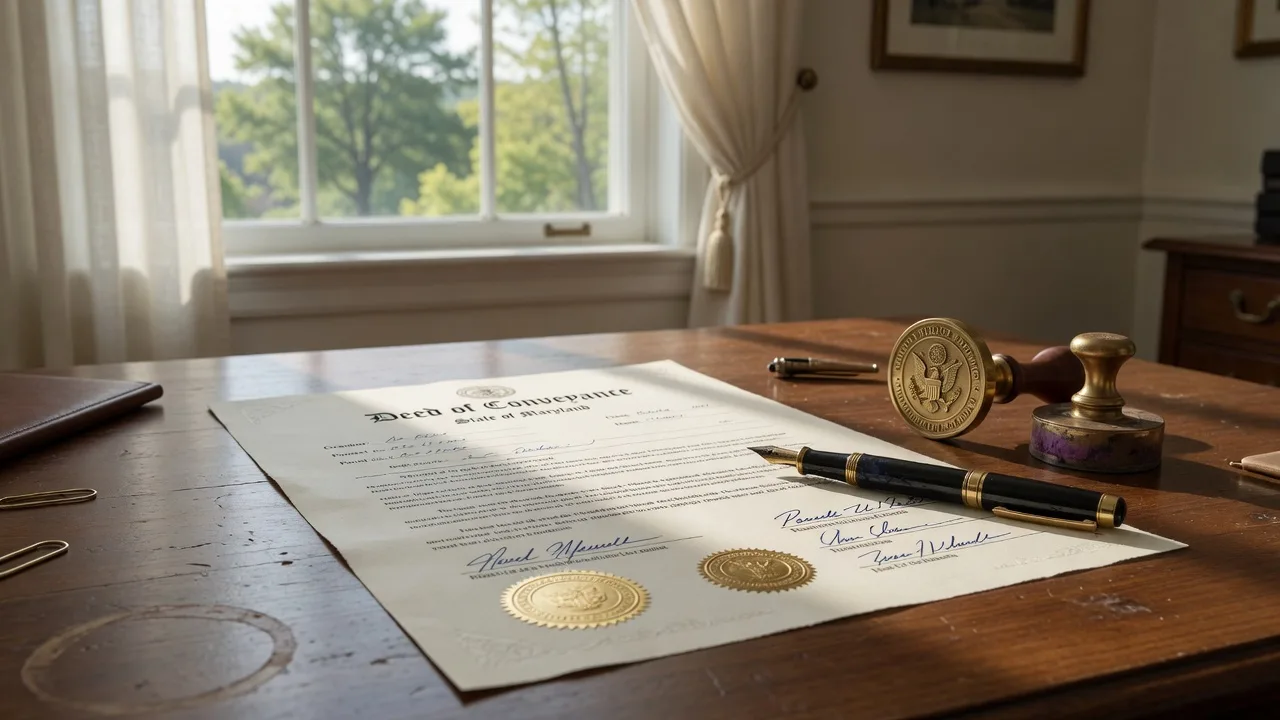
A transfer-on-death deed (sometimes called a TOD deed or beneficiary deed) is a legal document that lets you name someone to receive your real estate when you die, without going through probate.
Here's how it works:
- During your lifetime: You sign a deed naming a beneficiary. You keep full ownership and control. You can sell, refinance, or revoke the deed at any time.
- At your death: The property passes directly to the named beneficiary. No probate. No court involvement. No personal representative needed.
- After death: The beneficiary records the deed and death certificate with the county land records office to perfect title.
Think of it like a beneficiary designation on a bank account or retirement fund, but for real estate.
When Does Maryland's Transfer-on-Death Deed Take Effect?
October 1, 2026.
The law is codified at Maryland Real Property Article, Title 14, Subtitle 10 (House Bill 738 / Senate Bill 651, 2026 session).
Key effective date rules:
- The deed must be recorded before the owner's death
- The owner must die on or after October 1, 2026
- A deed recorded before October 1, 2026 is NOT effective unless the owner dies on or after that date
- If the owner dies before October 1, 2026, the deed has no effect
How Does a Maryland Transfer-on-Death Deed Work?
Step 1: Create the Deed
The deed must:
- Be in writing
- Be signed by the owner
- Be notarized
- Be recorded with the county land records office before the owner's death
- Clearly identify the property and the beneficiary
Step 2: During Your Lifetime
While you're alive:
- You keep full ownership
- You can sell, refinance, or encumber the property
- You can revoke the deed at any time
- The beneficiary has no interest until you die
- Creditors of the beneficiary cannot reach the property
Step 3: At Your Death
When you die:
- The property passes automatically to the named beneficiary
- No probate is required
- No personal representative is needed
- The beneficiary must record the deed and death certificate to perfect title
Step 4: After Death
The beneficiary must:
- Record the transfer-on-death deed and certified death certificate with the county land records
- Clear any title issues (liens, mortgages, code violations)
- Obtain title insurance if selling
- Address any inheritance tax obligations
What Are the Benefits?
1. Avoids Probate
The biggest benefit. The property passes directly to the beneficiary without court involvement, saving time and money.
2. Owner Keeps Control
Unlike a regular deed, you keep full ownership during your lifetime. You can sell, refinance, or change your mind at any time.
3. Simple and Inexpensive
A TOD deed is relatively simple to create and record. No trust required. No attorney required (though recommended).
4. Revocable
You can revoke the deed at any time during your lifetime. Just record a new deed or a revocation.
5. Protects from Beneficiary's Creditors
Until you die, the beneficiary has no interest in the property. Their creditors cannot reach it.
What Are the Limitations?
1. Does NOT Avoid Inheritance Tax
This is critical. The transfer-on-death deed does NOT avoid Maryland's 10% inheritance tax. If you name a non-exempt beneficiary (niece, nephew, friend), they will owe 10% of the property's value.
Example: You leave a $400,000 house to your niece via TOD deed. She avoids probate but owes approximately $40,000 in Maryland inheritance tax.
2. Does NOT Avoid Estate Tax
If your estate exceeds the $5 million Maryland estate tax exemption, the TOD deed doesn't help. The property is still included in your taxable estate.
3. Does NOT Clear Liens or Mortgages
The TOD deed doesn't erase existing mortgages, liens, or title problems. The beneficiary takes the property subject to all existing encumbrances.
4. Does NOT Work If You Die Before October 1, 2026
The deed is only effective for deaths on or after October 1, 2026. If you record a TOD deed today and die tomorrow, it has no effect.
5. Beneficiary Must Perfect Title
After your death, the beneficiary must record the deed and death certificate, clear title issues, and obtain title insurance. This isn't automatic.
6. Only Works for Real Estate
The TOD deed only covers real estate. It doesn't cover bank accounts, investments, or personal property. You need separate beneficiary designations for those.
Who Should Consider a Transfer-on-Death Deed?
Good candidates:
- Homeowners who want to avoid probate for their heirs
- People with simple estates (one property, clear title, no disputes)
- Married couples who want to name children as beneficiaries
- People who want to keep control during their lifetime
- People who don't need the asset protection of a trust
Not ideal for:
- People with complex estates (multiple properties, business interests, blended families)
- People who need Medicaid planning (TOD deeds don't protect against Medicaid estate recovery)
- People with significant debt (creditors may have claims against the estate)
- People who want to avoid the inheritance tax for non-exempt beneficiaries
How Does the TOD Deed Affect Inherited Property?
If you inherit property that was transferred via TOD deed, here's what to expect:
1. No Probate Required
The property passes directly to you. You don't need to open probate or get Letters of Administration.
2. You Must Perfect Title
Record the TOD deed and death certificate with the county land records. This puts title in your name.
3. You Take Subject to Liens
Any existing mortgages, liens, or title problems transfer with the property. You're responsible for them.
4. Inheritance Tax May Apply
If you're a non-exempt beneficiary (niece, nephew, friend), you owe 10% inheritance tax. Exempt beneficiaries (spouse, children, siblings) pay nothing.
5. You Can Sell Immediately
Once title is perfected, you can sell the property. You don't need to wait for probate to close.
TOD Deed vs. Other Transfer Methods
| Method | Probate Required? | Inheritance Tax? | Owner Keeps Control? | Cost |
|---|---|---|---|---|
| Transfer-on-Death Deed | No | Yes (if non-exempt beneficiary) | Yes | Low |
| Revocable Living Trust | No | Yes (if non-exempt beneficiary) | Yes | Moderate |
| Tenancy by the Entirety | No | No (spouse exempt) | Yes (joint) | None |
| Joint Tenancy with Survivorship | No | No (if joint owner is exempt) | Yes (joint) | None |
| Will + Probate | Yes | Yes (if non-exempt beneficiary) | No (after death) | Moderate to High |
| Small Estate Administration | Simplified | No (if small estate exempt) | No (after death) | Low |
Transfer-on-Death Deed
Probate: No
Inheritance Tax: Yes (if non-exempt)
Control: Yes · Cost: Low
Revocable Living Trust
Probate: No
Inheritance Tax: Yes (if non-exempt)
Control: Yes · Cost: Moderate
Tenancy by the Entirety
Probate: No
Inheritance Tax: No (spouse exempt)
Control: Yes (joint) · Cost: None
Joint Tenancy with Survivorship
Probate: No
Inheritance Tax: No (if exempt)
Control: Yes (joint) · Cost: None
Will + Probate
Probate: Yes
Inheritance Tax: Yes (if non-exempt)
Control: No · Cost: Moderate-High
Small Estate Administration
Probate: Simplified
Inheritance Tax: No (if exempt)
Control: No · Cost: Low
Maryland-Specific Rules
1. Tenancy by the Entirety Still Takes Priority
If property is held as tenants by the entirety (Maryland's default for married couples), the TOD deed is unnecessary. The surviving spouse already owns the whole property automatically.
2. Inheritance Tax Still Applies
The TOD deed does not change Maryland's inheritance tax. Non-exempt beneficiaries still owe 10%.
3. Recordation and Transfer Tax Exemption
The new law exempts the TOD transfer itself from recordation and transfer tax if the property is the owner's primary or secondary residence. This does NOT exempt the normal transfer tax when the beneficiary later sells.
4. Nonresident Heirs
If you live outside Maryland and inherit property via TOD deed, you still need to address Maryland's nonresident withholding at closing (Form MW506NRS) if you sell.
What If the Beneficiary Dies Before the Owner?
If the named beneficiary dies before the owner, the TOD deed has no effect. The property passes through the owner's estate (will or intestacy) as if the TOD deed never existed.
The owner should name alternate beneficiaries or update the deed if circumstances change.
Can You Revoke a Transfer-on-Death Deed?
Yes. You can revoke at any time during your lifetime by:
- Recording a new TOD deed naming a different beneficiary
- Recording a revocation document
- Selling or transferring the property
The beneficiary has no rights until your death, so you don't need their consent to revoke.
What About Mortgages on the Property?
The TOD deed does NOT:
- Transfer the mortgage to the beneficiary
- Require the lender to modify the loan
- Trigger the due-on-sale clause (under the Garn-St. Germain Act)
- Erase the mortgage obligation
The beneficiary takes the property subject to the existing mortgage. If the beneficiary wants to keep the property, they must continue making mortgage payments or refinance.
Frequently Asked Questions
When does Maryland's transfer-on-death deed take effect?
October 1, 2026. The deed must be recorded before the owner's death, and the owner must die on or after October 1, 2026.
Does a TOD deed avoid Maryland inheritance tax?
No. The inheritance tax still applies to non-exempt beneficiaries (nieces, nephews, friends, etc.). Exempt beneficiaries (spouse, children, siblings) pay nothing.
Does a TOD deed avoid probate?
Yes. The property passes directly to the named beneficiary without probate.
Can I revoke a TOD deed?
Yes. You can revoke at any time during your lifetime by recording a new deed or a revocation.
What if the beneficiary dies before me?
The TOD deed has no effect. The property passes through your estate as if the deed never existed.
Does a TOD deed trigger the due-on-sale clause?
No. The Garn-St. Germain Act protects transfer-on-death deeds from triggering due-on-sale clauses.
Do I need a lawyer to create a TOD deed?
Not legally required, but recommended. A lawyer can ensure the deed is properly drafted, notarized, and recorded.
Can I name more than one beneficiary?
Yes, but you should specify how they take title (joint tenants, tenants in common, etc.) to avoid title issues later.
What if I have a mortgage on the property?
The TOD deed doesn't affect the mortgage. The beneficiary takes the property subject to the existing loan.
Is a TOD deed better than a living trust?
It depends. A TOD deed is simpler and cheaper, but a living trust offers more flexibility, privacy, and asset protection. Consult an estate attorney to compare.
Related Topics
For more information on related topics, see these guides:
- read our full analysis of the new 2026 TOD deed law — Complete guide to the new Transfer-on-Death Deed Act effective October 1, 2026
- Maryland estate and inheritance tax — How Maryland's two death taxes work and who pays
- How long probate takes — Timeline from filing to closing in Maryland
- Documents needed to sell inherited property — What you need to transfer title after death
- Selling inherited property in Montgomery County — Local guide to selling an estate home
- Comparing selling options — How to choose the right path for your inherited property
- Contact Marc Cormier — Schedule a consultation about probate or inherited property
This article is for general informational purposes only and does not constitute legal, tax, financial, or real estate advice. Every estate situation is unique. We strongly encourage you to work with qualified professionals, including a probate attorney, CPA, and experienced real estate broker, before making any decisions related to inherited property. Marc Cormier is a licensed real estate professional, not an attorney, CPA, or financial advisor.
Have Questions About Probate or Inherited Property?
Marc Cormier has 27 years of experience helping Maryland families navigate probate and estate sales. Whether you're planning ahead or dealing with an inherited property, he can help.
This article is for general informational purposes only and does not constitute legal, tax, financial, or real estate advice. Every estate situation is unique. We strongly encourage you to work with qualified professionals, including a probate attorney, CPA, and experienced real estate broker, before making any decisions related to inherited property. Marc Cormier is a licensed real estate professional, not an attorney, CPA, or financial advisor.
About the Author
Marc Cormier is a licensed real estate professional with Berkshire Hathaway HomeServices PenFed Realty in Potomac, Maryland, with 27 years of experience and close to 1,000 homes sold. He holds the Seniors Real Estate Specialist (SRES) designation and specializes in probate, distressed property, and estate sales across Maryland, DC, and Virginia.