Educational blog article | probatefaq.com | October 10, 2026
By Marc Cormier | Berkshire Hathaway HomeServices PenFed Realty
Hidden Cost of Inheriting a Maryland 55+ Home
By Marc Cormier
Last reviewed: October 10, 2026
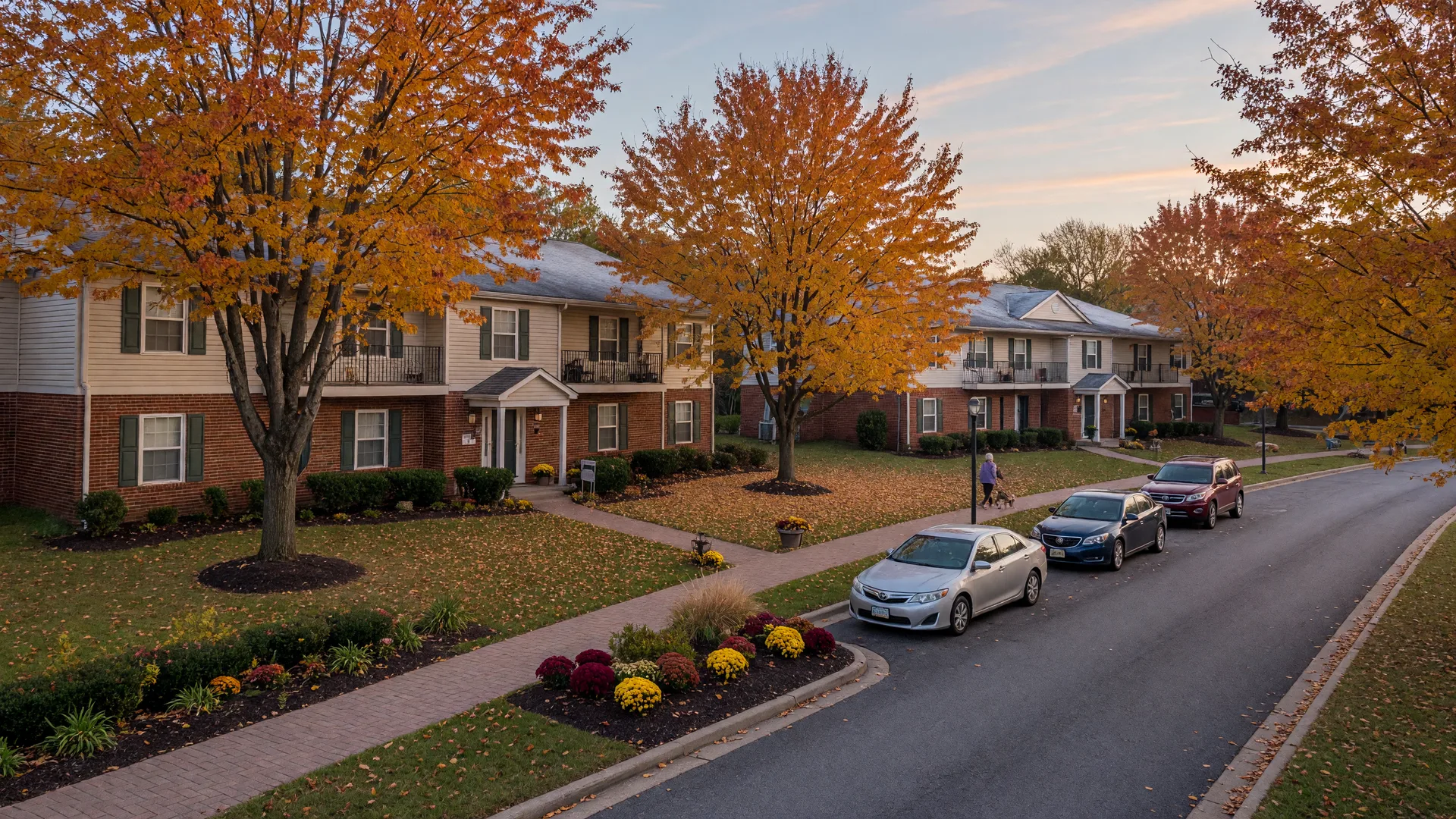
A $270,000 home can look like a generous inheritance. But heirs may have to pay thousands in community fees, taxes, insurance, cleanout bills, and selling costs before they see any money. This article explains where the money goes and why selling strategy matters.
A home's market value is not the family's net inheritance
Research supplied for this article covers 1,600 standard closed sales in Montgomery County senior communities from January 2023 through October 2026. The median closed price was $270,000. Among 283 transactions with usable community-fee information, the median fee was $927 a month. These are supplied figures, not independently re-audited MLS records; the fee sample does not cover every transaction.
The median monthly fee reported for Leisure World was $931.50 on a median $255,000 sale. That is $11,178 a year in fees alone. Communities differ in what their fees cover, so heirs must read the specific condominium or association documents.
How carrying costs grow while a home is being sold
Using an illustrative $927 monthly community fee and $230 monthly property tax, the cost is $1,157 a month before mortgage payments, utilities, insurance, repairs, and special assessments.
| Holding period | Community fee and property taxes |
|---|---|
| 3 months | $3,471 |
| 6 months | $6,942 |
| 9 months | $10,413 |
| 12 months | $13,884 |
The family may first need legal authority to sell, then sort belongings, empty the property, choose repairs, prepare resale documents, find a buyer, and close. Each delayed month has a price.
A realistic sale-cost example
Suppose a home is first offered at $270,000 and ultimately sells for $264,060 (2.2% below the original asking price). Assume total selling expenses of 6% of the actual sale price and 7.7 months of community fees and property taxes.
| Item | Illustrative amount |
|---|---|
| Difference from initial asking price | $5,940 |
| Selling costs (6% of sale price) | $15,844 |
| Carrying expenses (7.7 months) | $8,909 |
| Combined reduction versus initial asking price | $30,693 |
Under those assumptions, approximately $239,307 remains relative to the original $270,000 asking-price benchmark, before debt payoff, cleanout, improvements, legal costs, and taxes. The $5,940 is not an extra bill: it is a difference between the initial asking price and the actual price received. Commission rates and other selling expenses are negotiable.
Why the qualified buyer pool may be smaller
A senior-community home does not compete with every house in the surrounding market. Occupancy rules narrow the audience. Retirement financing can narrow it further. Lenders may consider Social Security, pensions, investment income, and eligible retirement-account distributions, but must document that the income meets underwriting rules.
High fees are a major factor. On a hypothetical $270,000 purchase with 20% down, a 30-year mortgage at an assumed 6.5% interest rate has about $1,365 in principal and interest. Add a $927 community fee, $230 in taxes, and $75 in insurance: total housing costs approach $2,597 each month. At a 45% debt-to-income threshold, that housing cost alone requires roughly $5,771 in monthly qualifying income with no other debt. That threshold is illustrative, not a promise of approval.
Another risk exists at the building level: even a well-qualified buyer may not secure a particular conventional or FHA loan if the condominium does not satisfy applicable project requirements for insurance, repairs, financial health, or program approval.
Does paying cash solve the problem?
Cash eliminates mortgage underwriting, but not the community fee or other ownership bills. Some financial advisers may counsel retirees to preserve liquid assets for future needs instead of using a large share of savings to buy outright. That is not a universal rule: an all-cash purchase can make sense for some buyers. The point is that financing and cash-buying decisions can both limit the practical audience.
What the supplied market data suggests
The supplied research reports that 64% of closed transactions were cash purchases, 31.6% had list-price reductions, and 23.5% took more than 60 days in its recent 12-month subset. Those figures do not establish how many people were denied mortgages or why buyers paid cash. They do justify checking the financing options and fees for each specific community before setting a list price.
Sell as-is or prepare for the open market?
A cash as-is sale can reduce cleanout, repair, and timing burdens, but may produce a lower price. Painting, flooring, cleaning, photography, and staging can improve appeal, but owners should compare the probable added sale proceeds with the full cost of preparation and additional holding time. No single strategy is best for every estate.
The next step
Ask for a property-specific comparison: current market value, likely as-is proceeds, probable improved-market proceeds, monthly holding expenses, and available loan programs. A thoughtful plan protects the family better than simply choosing the highest asking price.
Contact Marc Cormier
Berkshire Hathaway HomeServices PenFed Realty | Office: (301) 660-6272 ext. 711 | Marc@Help34.com | www.Help34.com
Educational real estate information only; not legal, mortgage, tax, investment, or financial advice. Seek qualified local professionals for individual decisions.
Sources and verification notes
Local market numbers: supplied Bright MLS summary covering Montgomery County 55+ community closed sales, January 2023–October 2026. Original transaction export not independently verified; community-fee data cover 283 of 1,600 reported sales. All financing examples use hypothetical assumptions, not a current lender quote.
- Fannie Mae Selling Guide: Debt-to-Income Ratios — https://selling-guide.fanniemae.com/sel/b3-6-02/debt-income-ratios
- Fannie Mae Selling Guide: Annuity, Pension, or Retirement Income — https://selling-guide.fanniemae.com/sel/b3-3.4-03/annuity-pension-or-retirement-income
- Fannie Mae Selling Guide: Ineligible Projects — https://selling-guide.fanniemae.com/sel/b4-2.1-03/ineligible-projects
- Maryland Register of Wills — https://registers.maryland.gov/Main/taxes.html
- HUD: Housing for Older Persons Act (HOPA) guidance — https://www.hud.gov/sites/documents/DOC_7769.pdf
probatefaq.com • Maryland 55+ Homeowner Education