Probate Real Estate
August 17, 2026 · Marc Cormier
Selling Inherited Property to a Family Member in Maryland, Virginia, or DC
Marc Cormier is not an attorney or CPA. This page is for general informational and entertainment purposes only and is not legal or tax advice. Every estate situation is unique. We strongly encourage you to work with qualified professionals, including a probate attorney, CPA, and experienced real estate broker, before making any decisions related to inherited property.
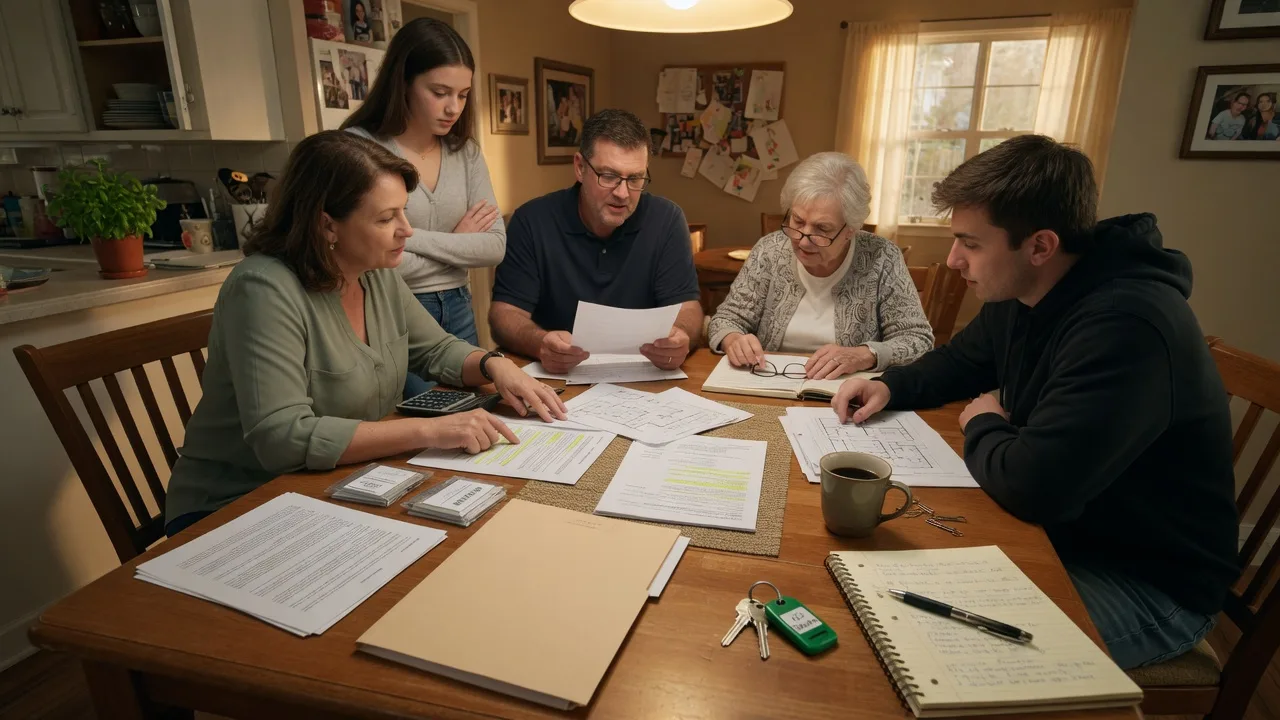
How to Structure a Family Buyout the Right Way
Selling the inherited house to a sibling or another relative works fine when it's handled like a real sale: appraisal, written agreement, title company, documentation. It goes sideways when it's handled like a favor.
This guide covers how to structure a family buyout in Maryland, Virginia, and DC, how to price it fairly, when a discount is defensible and when it isn't, and where these deals tend to fall apart.
How Do You Sell Inherited Property to a Family Member the Right Way?
Treat it as a real transaction. Get a formal appraisal, agree on a price grounded in that appraisal, put the terms in writing through an attorney, arrange financing, and close through a title company. Skipping any one of these steps is how a family buyout turns into a family dispute.
Do You Have to Sell at Full Appraised Value?
No, but pricing meaningfully below appraised value creates two separate problems: it can trigger IRS gift tax reporting, and it can quietly cost the other heirs money they never agreed to give up.
If three siblings inherit a house appraised at $480,000 and one buys it at $380,000, the other two didn't just do their sibling a favor. They each gave up roughly $33,000 in value. That math tends to surface later, often at a holiday dinner, long after everyone thought the deal was settled.
The fix is the same one that protects everyone: get an independent appraisal, price against it, and put the reasoning in writing, whatever that reasoning turns out to be.
Can You Discount the Price Because the Family Isn't Paying a Realtor Commission?
Yes, and this is one of the more defensible discounts a family can agree to, because it reflects a real cost the estate would have paid anyway on an open-market sale.
Here's the logic. A typical full-service commission in Maryland, Virginia, and DC runs around 5 to 6 percent of the sale price. If the heirs sold the house on the open market for its full appraised value, they'd net roughly 94 to 95 percent of that number after commission. A direct sale to a family member skips that cost entirely, so pricing the sale at appraised value minus the commission the estate would have paid often leaves the non-buying heirs with close to the same amount they'd have received either way.
Example. Appraised value: $480,000. Estimated commission the estate would pay on an open-market sale: 6 percent, or $28,800. Discounted sale price to the family member: $451,200. Split three ways among equal heirs, each heir's share is $150,400, which is close to what each would net from an open-market sale after commission.
This is a common, reasonable approach, and it's worth saying clearly: it isn't automatically gift-tax-neutral just because the logic makes sense at the kitchen table. The IRS generally measures a gift against the appraised fair market value, not against what the estate would have netted after a hypothetical commission. In practice, the dollar amount involved is often small enough per selling heir to fall under the annual gift tax exclusion, which is $19,000 per recipient for 2026, so it frequently doesn't trigger a reporting requirement at all. But "frequently" isn't "always," and every family's numbers are different. Run the actual figures past your CPA before you finalize a price, and get every heir's written agreement to the discount and the reasoning behind it.
Can You Offer a Bigger Discount to a Family Member Who Took Care of Mom or Dad?
Families do this, and there's an understandable instinct behind it. It's also the discount most likely to cause a dispute, so go into it with your eyes open.
The instinct makes sense: one sibling handled doctor's appointments, moved in for the last two years, or covered expenses nobody else did, and the family wants that recognized. The problem is that folding caregiving compensation into a property discount after death mixes two different things that are usually cleaner when kept separate.
What tends to work better:
- Document it as a distinct credit, not a hidden discount. If the family agrees the caregiving heir is owed something, put a specific number on it, in writing, and get every heir's signature. "Caregiving credit of $X, agreed to by all heirs" holds up. A quietly adjusted sale price that nobody else fully understood does not.
- Get everyone's consent before the price is set, not after. If the caregiving heir is also the executor or trustee, this is a self-dealing transaction under the law, and the fiduciary has to prove it was fair, fully disclosed, and properly authorized. Skipping disclosure exposes that heir to personal liability even if the family agreed informally.
- Understand this is different from a formal caregiver agreement. If mom or dad set up a paid caregiver arrangement while they were alive, with an attorney, that's compensation and it's taxed and treated differently than a post-death property discount. A discount decided after death, based on care given before death, doesn't get the same legal footing. It's still workable, it just needs to be handled as a deliberate, disclosed family decision, not an assumption.
The honest version of this conversation, the one that protects the caregiving heir and everyone else, happens out loud with all heirs present or on the phone, not through a quietly adjusted number on a purchase agreement. Families that skip that conversation are the ones who end up in mediation two years later.
Who Has Authority to Sell Inherited Property to a Family Member in Maryland, Virginia, or DC?
Authority depends on how the property is titled and where the deceased was domiciled, and a sale to a family member gets extra scrutiny in every jurisdiction because it's a self-dealing transaction by definition when the seller and buyer are connected.
| Situation | Who Sells | Extra Scrutiny |
|---|---|---|
| Property in a trust | Successor trustee | Trustee must act in all beneficiaries' interest; document that a sale to family still meets fair market value |
| Property in Maryland probate | Personal representative | Orphans' Court generally requires approval to sell unless the will grants power of sale; a sale to an heir typically needs full disclosure to the court and other beneficiaries |
| Property in Virginia probate | Executor or administrator | If the will grants power of sale, no separate court order is needed, but the fiduciary duty to all beneficiaries still applies to a family sale |
| Property in DC probate | Personal representative | The Reform Act of 1994 gives statutory authority to sell without prior court approval, but full transparency to beneficiaries about a family sale is still expected |
| Property already distributed to heirs | All co-owners | Every co-owner has to agree, or a court has to order the sale through a partition action |
If the personal representative or trustee is the one buying the property, involve a second attorney, one who represents that person as buyer, separate from the estate's attorney. Skipping this step is the single most common mistake in a fiduciary buyout, and it's the one most likely to expose the fiduciary personally.
How Do You Calculate a Family Buyout?
Here's a worked example with the numbers shown at every step, so you can see exactly where each figure comes from.
Worked Example
- Appraised value: $480,000
- Mortgage payoff: $60,000
- Estimated closing costs: $8,000
- Net equity: $480,000 − $60,000 − $8,000 = $412,000
- Three equal heirs: $412,000 ÷ 3 = $137,333 each
If one sibling wants to keep the house, that sibling needs to cover the other two heirs' shares, roughly $274,667, plus arrange the mortgage payoff and closing costs. Since the buying sibling already owns a one-third interest, the actual cash needed is the buyout of the other two shares, not the full net equity figure.
If the family agrees to a commission-equivalent discount on top of this, run that math separately and show it as its own line, so everyone can see exactly what was appraised, what was discounted, and why.
How Do You Finance a Family Buyout?
| Option | How It Works | Typical Timeline |
|---|---|---|
| Cash | Buyer pays the full amount upfront | Weeks |
| Conventional mortgage | Buyer qualifies for a standard home loan | 30 to 60 days |
| Estate or trust loan | Short-term loan to the estate, refinanced once title transfers | 2 to 4 weeks |
| Seller financing | Selling heirs carry a promissory note, buyer pays monthly | Flexible, needs a recorded deed of trust to secure it |
| Combination | Mix of cash, mortgage, and note | Varies |
If the selling heirs finance part of the deal themselves, the interest they collect is taxable income to them, and the note needs to charge at least the IRS applicable federal rate to avoid imputed interest problems. An attorney should draft the note and the deed of trust securing it, not a template pulled off the internet.
What Debts Have to Be Cleared Before the Sale Closes?
Order a title search early. It surfaces the mortgage payoff, any HELOC balance, reverse mortgage payoff demands, property tax liens, and judgment liens attached to the property, and every one of them has to be resolved before title can transfer cleanly. A payoff demand letter from each lienholder confirms the exact number needed at closing, and your buyout price should account for all of it, not just the balance the family assumes is owed.
What About Reimbursement for Carrying Costs and Repairs?
The heir who paid property taxes, insurance, or repairs out of pocket during the estate's administration is generally entitled to reimbursement before the proceeds get split. Keep receipts for every payment. Repairs that preserved value, a roof leak, a broken furnace, are usually treated differently by families than upgrades that added value, like a remodeled kitchen, so decide which category applies before the buyout closes, and put the answer in writing.
If one heir has been living in the house, the other heirs sometimes expect fair rental value credited back for that period. This is a common source of friction. Address it in writing before closing, not after.
Family Buyout Checklist
Checklist
- Confirm who has legal authority to sell (trustee, personal representative, or co-owners)
- Order an independent appraisal
- Identify all liens, the mortgage payoff, and any title issues
- Decide on and document any commission-equivalent or caregiving discount, with every heir's written agreement
- Agree on credits and reimbursements among heirs
- Set the price and a firm timeline
- Arrange financing
- Hire an attorney to draft the purchase agreement, note, and deed of trust if applicable
- Close through a title company
- Confirm tax treatment with each party's own CPA
- Distribute proceeds and file required returns
Frequently Asked Questions
What if a sibling can't afford to buy out the inherited property?
Seller financing through a promissory note, an estate or trust loan, or a conventional mortgage are the usual paths. If none of those work, listing the property on the open market is often the cleanest resolution.
Do all heirs have to agree to sell to one family member?
If the property is in a trust, the trustee's authority comes from the trust document. If heirs already co-own the property directly, every co-owner generally has to agree, or a court has to order a sale.
Can a personal representative or trustee buy the property from the estate they manage?
Yes, but it's self-dealing, and the fiduciary has to prove the sale was fair, fully disclosed, and properly authorized, usually with a separate attorney representing them as buyer.
Does Maryland charge inheritance tax on a family buyout?
Maryland charges a 10 percent inheritance tax on property passing to non-lineal heirs. Spouses, children, parents, grandchildren, siblings, and stepchildren are exempt. This applies to the inheritance itself, separate from how the property is later sold or divided among heirs.
Related Reading on Guide to Probate
- How to Sell a House in Probate in Maryland — the full step-by-step process
- How Long Does Probate Take in Maryland? — understand the timeline before you list
- Maryland Estate Tax vs. Inheritance Tax — what heirs need to know about taxes on the property
- Documents to Sell Inherited Property in Maryland — the complete checklist for a family buyout
- Common Mistakes When Inheriting a Maryland Home — avoid costly errors during the buyout process
- Cash Offer vs. Listing vs. Renovate in Probate — compare your selling options
- Fiduciary Duty as Personal Representative — what a personal representative is personally on the hook for
- Maryland Probate FAQ — quick answers on inheritance tax, timelines, and authority to sell
Working With Someone Who Has Handled This Before
A family buyout touches probate law, fiduciary duty, appraisal, financing, and family dynamics all at once, and the jurisdiction changes some of the rules along the way. Getting the structure right the first time is a lot less expensive than fixing it after someone feels shorted.
Marc Cormier is a licensed real estate professional with Berkshire Hathaway HomeServices PenFed Realty, with 27 years of probate real estate experience, serving Personal Representatives, surviving spouses, and families across Maryland, Virginia, and Washington, DC. He holds the Seniors Real Estate Specialist (SRES) designation and is the author of How To Sell Your Inherited Home.
If your family is working through a buyout and wants an appraisal-backed number everyone can trust, schedule a consultation before anyone signs anything.
Call Marc Cormier: (301) 660-6272
Schedule a Free ConsultationThis article is for general informational purposes only and does not constitute legal, tax, financial, or real estate advice. Every estate situation is unique. We strongly encourage you to work with qualified professionals, including a probate attorney, CPA, and experienced real estate broker, before making any decisions related to inherited property. Marc Cormier is a licensed real estate professional, not an attorney, CPA, or financial advisor.
About the Author
Marc Cormier is a licensed real estate professional with Berkshire Hathaway HomeServices PenFed Realty in Potomac, Maryland, with 27 years of experience and close to 1,000 homes sold. He holds the Seniors Real Estate Specialist (SRES) designation and specializes in probate, distressed property, and estate sales across Maryland, DC, and Virginia.