Probate Real Estate Guide
August 17, 2026 · Marc Cormier
Selling an Inherited Vacation Home in Maryland, Virginia, or DC: Taxes, Authority, and Family Decisions
This article is for general informational purposes only and does not constitute legal, tax, financial, or real estate advice. Every estate situation is unique. We strongly encourage you to work with qualified professionals, including a probate attorney, CPA, and experienced real estate broker, before making any decisions related to inherited property. Marc Cormier is a licensed real estate professional, not an attorney, CPA, or financial advisor.
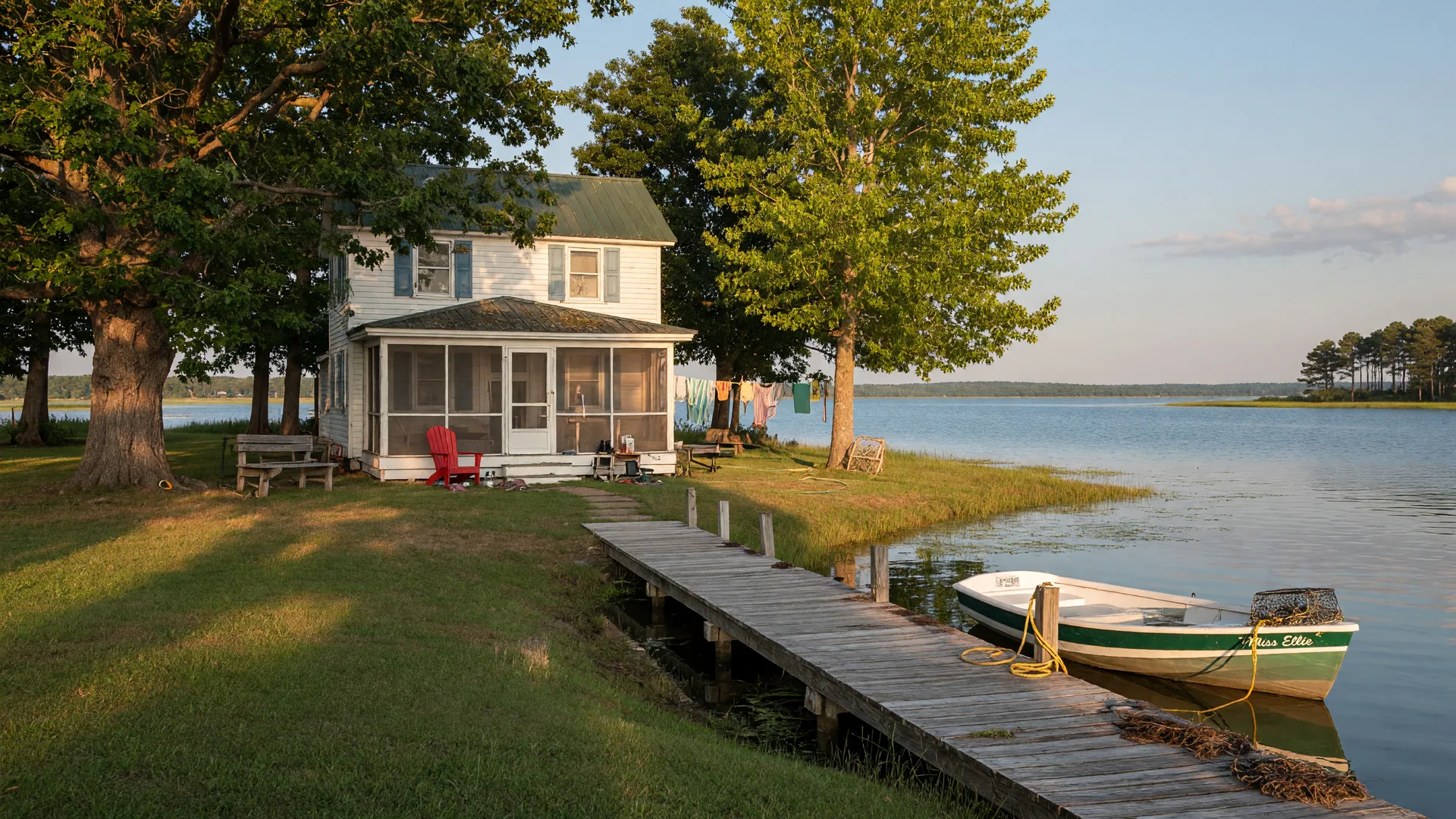
Selling the family beach house, the cabin at Deep Creek Lake, or the place on the Bay is rarely just a real estate decision. It's the property where the grandkids learned to swim or where Thanksgiving happened every year, and letting it go can feel like losing something you can't get back, even when the numbers say sell.
This guide covers what makes an inherited vacation home different from an inherited primary residence in Maryland, Virginia, and DC: who has legal authority to sell it, how the taxes work, what happens when the property sits in a different state than the one where probate was opened, and how to navigate it when the family doesn't agree.
How Is an Inherited Vacation Home Different From an Inherited Primary Residence?
A vacation home comes with three problems a primary residence doesn't: it's often in a different jurisdiction than where the deceased lived, the tax treatment depends on whether it was ever rented, and the emotional attachment tends to run deeper because the family visited it on purpose, not out of daily habit.
It's often out of state or out of your service area. A family based in Bethesda with a cabin in Garrett County or a place on the Delaware shore is common. Managing that sale means dealing with a market you don't watch every day, and it sometimes means opening a second probate proceeding in the property's own state.
Tax treatment depends on how the property was used. A cabin that was purely a personal retreat is taxed differently than one the deceased rented out on Airbnb or through a local property manager. Getting this classification right with your CPA is the first real decision you'll make, and it affects everything downstream.
The emotional stakes run higher. One sibling wants to keep the lake house because the family has gone every July for 20 years. Another needs the cash. A third lives 40 minutes away and has been the one mowing the lawn and paying the propane bill. These conversations are harder than deciding what to do with a house nobody visited in a decade.
Who Has Legal Authority to Sell an Inherited Vacation Home in Maryland, Virginia, or DC?
The personal representative appointed by the probate court, or the successor trustee if the home was held in trust, has authority to sell, and the specific rules depend on which jurisdiction the property sits in.
Maryland: The Orphans' Court generally requires court approval before you sell, unless the will explicitly grants power of sale. You need Letters of Administration before acting, and you file an Inventory, including a formal appraisal, within three months of appointment.
Virginia: If the will grants power of sale, the executor sells without a separate court order. If the will is silent or there's no will, you petition the court for authority first.
Washington, DC: Under the Reform Act of 1994, the personal representative has statutory authority to sell without prior court approval in most cases, even if heirs disagree, though you still file a petition describing the action taken on real property.
If the vacation home sits in a state other than where the deceased was domiciled, meaning a Maryland resident who owned a cabin in West Virginia, or a Virginia resident with a place on the Delaware shore, the estate typically needs ancillary probate in that second state before the property can be sold. That adds time and cost, and it's easy to miss if nobody flags it in the first few weeks. Confirm with your probate attorney whether ancillary administration applies before you list anything.
How Does Stepped-Up Basis Work for an Inherited Vacation Home?
Inherited property generally receives a stepped-up cost basis to fair market value as of the date of death, and this is the single biggest tax advantage available to heirs. If a Chesapeake Bay cottage was purchased for $150,000 in 1990 and is worth $650,000 at the date of death, the new basis is $650,000. Sell it for $660,000 and the taxable gain is $10,000, not $510,000.
Property acquired from a decedent is treated as long-term for capital gains purposes regardless of how quickly the heirs sell, so even a fast sale gets the lower long-term rate. What the stepped-up basis does not do is create the same exclusion available on a primary residence. The $250,000 single / $500,000 married Section 121 exclusion only applies to a home you owned and used as your principal residence for at least two of the five years before selling. A vacation home doesn't qualify unless someone in the family actually converts it and meets that test, which is uncommon.
Get a date-of-death appraisal, or at minimum a written broker opinion of value close to the date of death, and keep it in the estate file. This is your evidence for the basis if the IRS ever asks.
What If the Vacation Home Was Rented Out?
If the deceased rented the property, even occasionally through Airbnb or a local management company, the tax picture gets more complicated, and this is where you want your CPA involved before you list, not after.
The stepped-up basis generally wipes out depreciation the deceased claimed before death. But if the estate, trust, or heirs continue renting the property after death and claim depreciation before the sale, a portion of the gain tied to that post-death depreciation can be taxed at a higher federal rate, sometimes up to 25 percent. Your CPA needs to review how the property was reported on the deceased's prior returns and track anything claimed after death separately.
A property used both personally and as a rental has its own set of IRS rules under Publication 527, and the split matters if the family is considering a 1031 exchange, since that option only applies to property held for investment, not a home used mainly as a personal retreat.
What Are the Carrying Costs While the Estate Owns the Vacation Home?
Every month a vacation home sits unsold, the estate absorbs property tax, insurance, HOA or association dues, seasonal maintenance, and utilities, and none of that shows up as a line item until it's already been paid.
Insurance is the one that catches families off guard fastest. Standard homeowner policies often restrict or reduce coverage once a home is considered vacant, sometimes after a fairly short window. Call the carrier as soon as you're appointed, get written confirmation of what is and isn't covered, and ask about a vacancy or estate policy if the standard one won't hold. Waterfront and mountain properties add their own layers: flood and wind coverage for anything on the Bay or the Eastern Shore, and in some cases separate coverage considerations for well water and septic systems on rural mountain or lake properties in Western Maryland and the Blue Ridge.
Seasonal maintenance matters too. Winterizing pipes, closing up a dock before freeze, keeping the heat on so pipes don't burst, mowing so a Maryland county doesn't cite the estate for a code violation. If nobody local is checking on the property, a small problem becomes an expensive one before anyone notices.
Add up property tax, insurance, HOA fees, utilities, and maintenance on a monthly basis. That number is what indecision costs the estate every month the family debates what to do.
For more detail on protecting a vacant property, read Insurance on Vacant Probate Property and Out-of-State Executors: Handling a Maryland Estate.
Comparing Your Options: Traditional Sale vs. Cash Sale vs. Keep as Rental
When you inherit a vacation home, three main paths are available. Each has different tradeoffs for timing, effort, and financial outcome. The right choice depends on the estate's cash needs, the property's condition, and the family's long-term goals.
| Factor | Traditional Sale | Cash Sale | Keep as Rental |
|---|---|---|---|
| Typical timeline | 3 to 6 months to close | 1 to 4 weeks to close | Ongoing income, indefinite hold |
| Sale price potential | Highest potential, market-driven | Below market, typically 10-20% discount | N/A (not a sale) |
| Repairs needed | Often required for market-ready listing | Sold as-is, no repairs needed | Must be habitable and safe for tenants |
| Carrying costs | Estate pays during listing period | Minimal, fast close | Offset by rental income, but ongoing |
| Effort required | Moderate, agent handles marketing | Minimal, one transaction | High, ongoing property management |
| Tax implications | Capital gains on appreciation after death | Same as traditional sale | Rental income taxed as ordinary income; capital gains on eventual sale |
| Best for | Properties in good condition, strong local market | Needs repairs, estate needs cash, out-of-state PR | Families who want to keep the property, can manage from a distance |
Before choosing any option, review how much probate costs in Maryland to understand the estate expenses that will affect your net proceeds. Also consult Maryland estate tax vs. inheritance tax to understand the tax obligations specific to your situation. And review common mistakes when inheriting a Maryland home to avoid costly errors during the process.
What Happens When Heirs Disagree About Selling a Vacation Home?
One heir wants to keep the family place, one wants to sell, and a third would buy the others out if the price were right. This is the most common conflict in a vacation home estate, and it has a structured path through it.
Start with an independent appraisal so everyone is working from the same number instead of arguing over what the property is worth. Then lay out the actual annual carrying cost next to that number, since most heirs who want to keep a vacation home haven't run the math on what it costs every year to hold onto it.
A buyout between heirs is workable, but it needs to happen at fair market value, in writing, through the estate's formal process, not a handshake between siblings. If the family can't reach agreement, the personal representative has a fiduciary duty to act in the interest of all beneficiaries, and if the will or trust allows a sale, the fiduciary can move forward even over one heir's objection. That decision should be documented and made with legal counsel involved, not made unilaterally.
For more on what happens when siblings can't agree, read What Happens When Heirs Disagree About Selling the House?
What Local Market Factors Affect Selling a Vacation Home in This Region?
Vacation properties in Maryland and Virginia carry their own seasonal and location-specific issues, and they're different depending on where the property sits.
Deep Creek Lake and Western Maryland cabins: Well water and septic inspections are standard buyer requests. Winter access and road maintenance affect showing schedules, and listing in late spring through summer typically reaches the widest buyer pool of second-home and vacation-rental buyers.
Chesapeake Bay and Eastern Shore waterfront: Flood zone certification, dock permits, and erosion history come up in nearly every buyer's due diligence. Confirm flood insurance is active immediately, since a lapse on waterfront property is a real liability, not a technicality.
Blue Ridge and Shenandoah Valley cabins: Well water testing, septic inspection, and wildfire-adjacent insurance questions are common. Rural access can affect closing logistics more than buyers expect going in.
Condo or HOA-governed vacation properties: Request the HOA resale package early. Outstanding assessments, rental restrictions, and transfer approval requirements all affect your timeline and your buyer pool, and an HOA estoppel letter will confirm any balance owed before closing.
What Mistakes Do Families Make When Selling an Inherited Vacation Home?
Not classifying the property correctly for taxes. Personal-use versus rental versus mixed-use changes depreciation recapture, 1031 eligibility, and how the gain gets taxed. Settle this with a CPA before you list, not after an offer comes in.
Letting the family debate eat up months while carrying costs run. Indecision has a real dollar cost every single month, and it doesn't pause for family conversations.
Assuming everyone shares the same attachment to the property. The heir who spent every childhood summer there and the heir who visited twice may see the exact same asset in completely different terms. Surface that early instead of letting it surface during a listing decision.
Letting insurance lapse on a vacant property. One storm, one pipe burst, one break-in on an uninsured vacant vacation home reduces what every heir eventually receives.
Missing ancillary probate. If the property sits in a different state than where the deceased was domiciled, skipping this step delays the sale by months once a title company catches it during closing, not before.
Frequently Asked Questions
Do you get a stepped-up basis on an inherited vacation home?
Yes, generally. Inherited property receives a stepped-up basis to fair market value at the date of death regardless of whether it was a primary residence, vacation home, or rental.
Can you use a 1031 exchange on an inherited vacation home?
Only if the property qualifies as investment or rental property. A home used purely as a personal retreat doesn't qualify, and even a qualifying property runs on a tight 45-day identification and 180-day closing window. Talk to your CPA before assuming this option is available.
Do heirs owe Maryland inheritance tax on a vacation home?
Maryland charges a 10 percent inheritance tax on property passing to non-lineal heirs. Spouses, children, parents, grandchildren, siblings, and stepchildren are exempt. This is separate from any capital gains tax owed on the sale itself.
What happens if one heir has been paying the carrying costs?
That heir often has a claim for reimbursement from the estate for documented expenses that benefited everyone. Handle it through the estate administration in writing, not informally between siblings.
Related Reading on Guide to Probate
- Out-of-State Executors: Handling a Maryland Estate — what to do when you're managing the property from a distance
- How to Sell a House in Probate in Maryland — the full step-by-step process
- Insurance on Vacant Probate Property — the coverage gap that catches families off guard fastest
- How Much Does Probate Cost in Maryland? — understand estate expenses before you sell
- Maryland Estate Tax vs. Inheritance Tax — what heirs need to know about taxes on the property
- Common Mistakes When Inheriting a Maryland Home — avoid costly errors during the process
Working With Someone Who Has Handled This Before
Selling an inherited vacation home in Maryland, Virginia, or DC means running the estate's legal timeline, the tax classification, and a local market you may not check every week, all at the same time. Miss a step in any one of those and it shows up later as a lower offer or a delayed closing.
Marc Cormier is a licensed real estate professional with Berkshire Hathaway HomeServices PenFed Realty, with 27 years of probate real estate experience, serving Personal Representatives, surviving spouses, and families across Maryland, Virginia, and Washington, DC. He holds the Seniors Real Estate Specialist (SRES) designation and is the author of How To Sell Your Inherited Home.
If your family is trying to decide what to do with an inherited vacation home, schedule a consultation before you list anything or make a promise to a sibling you can't take back. That conversation costs you nothing.
This article is for general informational purposes and is not legal, tax, or financial advice. Probate, ancillary administration, and tax rules vary by jurisdiction and by individual circumstances. Confirm every decision with a probate attorney and CPA before acting.
About the Author
Marc Cormier is a licensed real estate professional with Berkshire Hathaway HomeServices PenFed Realty in Potomac, Maryland, with 27 years of experience and close to 1,000 homes sold. He holds the Seniors Real Estate Specialist (SRES) designation and specializes in probate, distressed property, and estate sales across Maryland, DC, and Virginia.