Free Printable Checklist
Should I Repair a Probate House
Before Selling?
Not all repairs on an inherited house produce a return. Some increase the sale price. Others are money you will never get back. The decision depends on the property's condition, the local market, the likely buyer, and the cost of each repair versus the expected increase in sale price.
This guide helps executors and personal representatives in Maryland decide which repairs are worth doing before selling a probate property and which ones are better left for the buyer to handle. The goal is not to make the house perfect. The goal is to determine which preparation will produce a worthwhile return on the estate's investment.
The Big Picture
The Short Answer
Not always. Some repairs increase the sale price. Others are money you will never get back. The right answer depends on the property's condition, the local market, the likely buyer, and the cost of the repair versus the expected return.
The goal is not to make the house perfect. The goal is to determine which preparation will likely produce a worthwhile return on investment.
ROI Analysis
Which Repairs Usually Produce a Return?
High ROI: Almost Always Worth Doing:
Deep cleaning ($200–$600): the cheapest improvement with the biggest impact. A clean house signals care and maintenance.
Interior painting, neutral colors ($2,000–$6,000 for whole home): neutral tones help buyers visualize their own furniture in the space.
Landscaping cleanup ($500–$1,500): curb appeal is the buyer's first impression. A maintained yard signals a maintained home.
Fixing obvious defects (varies): cracked caulk, loose hardware, burnt-out bulbs, leaky faucets. These cost little and prevent buyers from assuming worse problems exist.
Decluttering and junk removal ($150–$800): buyers cannot picture their life in a house crammed with someone else's belongings.
Medium ROI: Depends on Condition:
Carpet cleaning ($150–$300): if stains are removable, cleaning is cheaper than replacement. If not, budget for replacement ($780–$2,813).
Pressure washing ($200–$500): siding, driveway, deck. Changes how the house reads in photos.
Minor kitchen updates ($1,000–$5,000): new hardware, painted cabinets, updated light fixtures. Not a full remodel, but a refresh.
Bathroom refresh ($500–$2,000): new caulk, updated fixtures, fresh paint.
Low ROI: Usually Not Worth It:
Full kitchen remodel ($14,588–$41,550): rarely pays for itself dollar for dollar at closing.
Full bathroom remodel ($12,000–$35,000): same issue. The cost usually exceeds the increase in sale price.
New flooring throughout ($5,000–$15,000): buyers often replace flooring anyway. Only worth it if the current flooring is truly offensive.
Major system upgrades (new roof $8,000–$15,000, new HVAC $5,000–$12,000): these are expensive and may not return their full cost. Often better to price the property accordingly and let the buyer handle it.
As-Is Strategy
Should I Sell an Inherited House As-Is?
Sometimes. Selling as-is makes sense when:
The property needs more work than you can afford or manage
You are out of state and cannot supervise renovations
The probate timeline is tight
The cost of repairs exceeds the expected increase in sale price
You want certainty and speed (cash buyers purchase as-is)
Selling as-is does not mean selling without any preparation. Even an as-is sale benefits from cleaning, decluttering, and removing obvious hazards.
Decision Framework
How Do I Decide Whether a Repair Will Produce a Return?
Ask these three questions:
Will this repair actually affect the buyer's offer? Buyers notice kitchens, bathrooms, curb appeal, and obvious defects. They do not usually care about upgraded light switches or new door handles.
Does the cost exceed the expected increase in sale price? If a $10,000 kitchen update only increases the sale price by $5,000, you have lost $5,000. Price the property accordingly instead.
Can the buyer do this work cheaper than I can? Professional contractors and flippers often have lower costs and faster timelines. Let them handle major renovations if the numbers make more sense that way.
Estate Expenses
Can Repairs Be Paid From the Estate?
Yes. The Personal Representative can use estate funds to pay for property preparation before listing. These costs are legitimate estate expenses that are paid before assets are distributed to heirs.
Keep receipts for all repairs and improvements. They are part of the estate accounting.
Can Repairs Be Paid at Closing?
Some contractors and service providers will agree to payment at closing. This is especially common with:
Cleaning services
Junk removal companies
Painters and landscapers
Staging companies
This reduces upfront cash requirements for the estate.
Property Preparation
Should I Clean Out the Property Before Selling?
Almost always, yes. A clean, decluttered property:
Photographs better for listing photos
Shows more spacious to buyers
Signals the home was cared for
Reduces carrying costs (smaller items are easier to manage)
Makes inspections easier
The exception: if you are selling to a cash buyer or investor who expects to handle cleanout themselves.
Staging
Should I Stage an Inherited House?
It depends on the property and the market. Staging can help buyers visualize the space and may lead to stronger offers. But staging costs money ($1,500–$5,000+) and may not be necessary for every property.
Staging makes the most sense when:
- The property is vacant
- The home is in good condition but needs help showing well
- The local market is competitive
- The price point justifies the investment
See our complete guide: Should You Stage a Probate House Before Selling It?
Cost Comparison
How Do I Compare Repair Costs with Potential Price Increase?
Create a simple comparison:
| Repair | Estimated Cost | Expected Price Increase | Net Return |
|---|---|---|---|
| Deep cleaning | $400 | $2,000–$5,000 | Positive |
| Interior painting | $3,000 | $5,000–$10,000 | Positive |
| Kitchen remodel | $25,000 | $10,000–$15,000 | Negative |
| Landscaping | $1,000 | $3,000–$7,000 | Positive |
| New carpet | $2,500 | $2,000–$4,000 | Break even |
If the expected increase exceeds the cost, the repair is worth considering. If the cost exceeds the expected increase, price the property accordingly and let the buyer handle it.
Get the Complete Checklist
Get the Complete Probate Home Repairs Checklist
This guide covers the key decisions. The complete printable checklist includes:
Repair-by-repair ROI analysis
Cost estimates for common repairs
Decision matrix for each repair category
As-is vs. repair comparison worksheet
Contractor coordination timeline
Budget tracking template
Optional
Get these checklists plus a personal walkthrough
Marc Cormier sends a free next-step checklist with his personal walkthrough of your situation. No cost, no obligation, and it never affects your free checklist above.
Optional: also get Marc’s next-step checklist
Frequently Asked Questions
Frequently Asked Questions About Repairs Before Selling an Inherited House
Should I make repairs before selling an inherited house?
Which repairs give the best return before selling?
Should I sell an inherited house as-is?
Can repairs be paid from the estate?
Is it worth replacing carpet before selling?
Should I stage an inherited house?
About the Author
About Marc Cormier
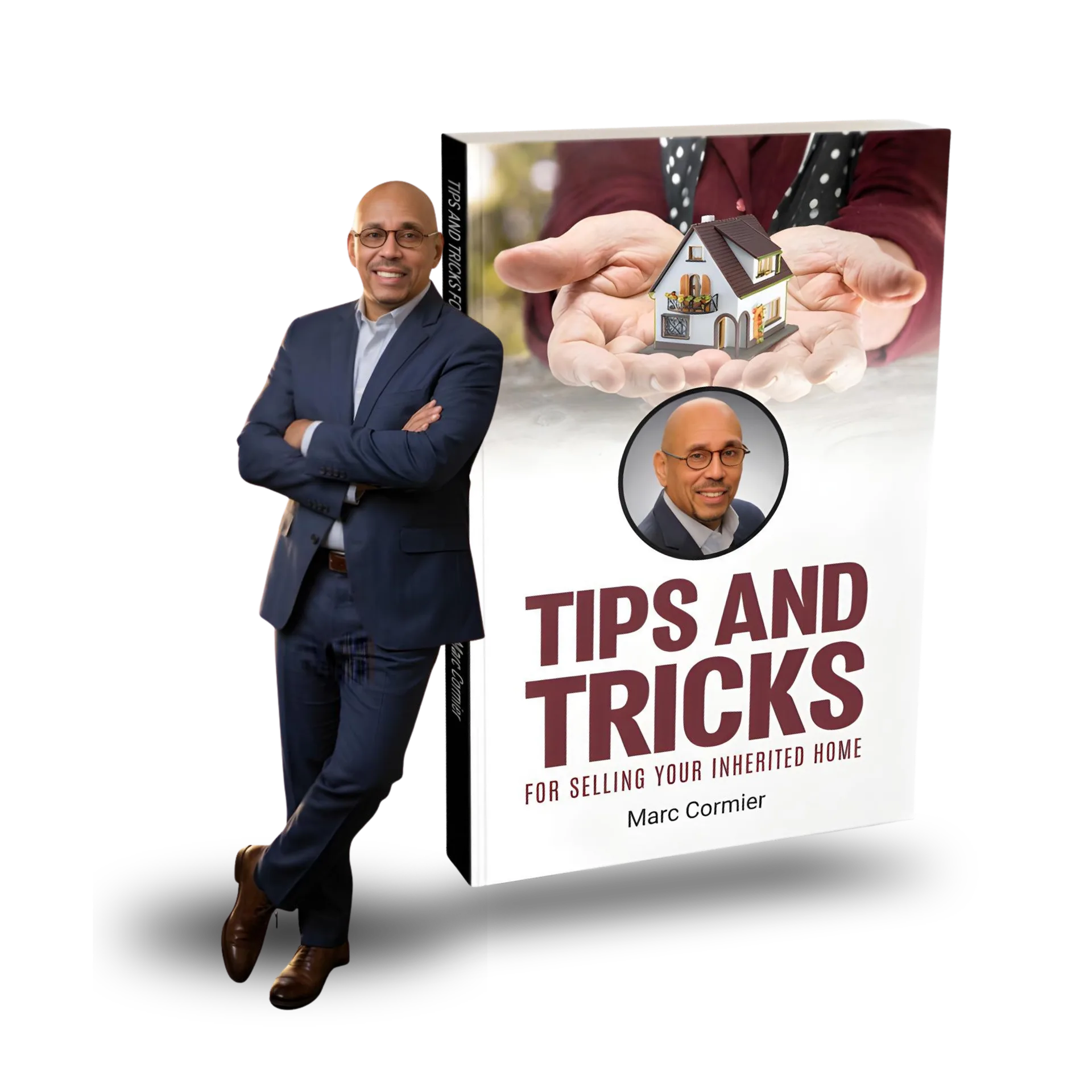
Marc Cormier is a licensed real estate professional with Berkshire Hathaway HomeServices PenFed Realty, based in Montgomery County, Maryland. He has 27 years of experience and has sold close to 1,000 homes, with a focus on probate properties, distressed sales, and helping families navigate the estate administration process. He holds the SRES (Seniors Real Estate Specialist) designation and is a Certified Probate Real Estate Specialist (CPRES).
Marc Cormier, Realtor
Berkshire Hathaway HomeServices PenFed Realty
(301) 660-6272
Related Resources
More on Probate Home Repairs and Sales
Should You Stage a Probate House Before Selling It?
Learn whether staging is worth the investment for your probate property
Should You Sell a Probate House As-Is or Make Repairs? (Maryland)
Deep dive on the as-is vs. repair decision for Maryland probate properties
Cash Offer vs. Listing vs. Renovate: Probate Property Options in Maryland
Compare your options when selling a probate property
Selling a Probate House: A Complete Guide
The full guide to selling probate property in Maryland, DC, and Virginia
How to Sell a Probate House in Montgomery County, Maryland
Step-by-step guide for selling probate property in Montgomery County
Need Help?
Need Help Deciding Which Repairs to Make?
This guide is a starting point. Every property and estate situation is different. If you have an inherited house and need expert advice on whether to repair, stage, or sell as-is, Marc can help.
Marc Cormier
Maryland Probate Real Estate Specialist
Berkshire Hathaway HomeServices PenFed Realty
(301) 660-6272Legal Disclaimer
The information in this guide is provided for educational purposes only and is not legal, tax, or financial advice. Probate laws vary, and every estate is different. Marc Cormier and Berkshire Hathaway HomeServices PenFed Realty are not acting as your attorneys or accountants. Before making legal decisions regarding an estate, consult with a competent Maryland probate attorney or other qualified professional familiar with your specific circumstances.